



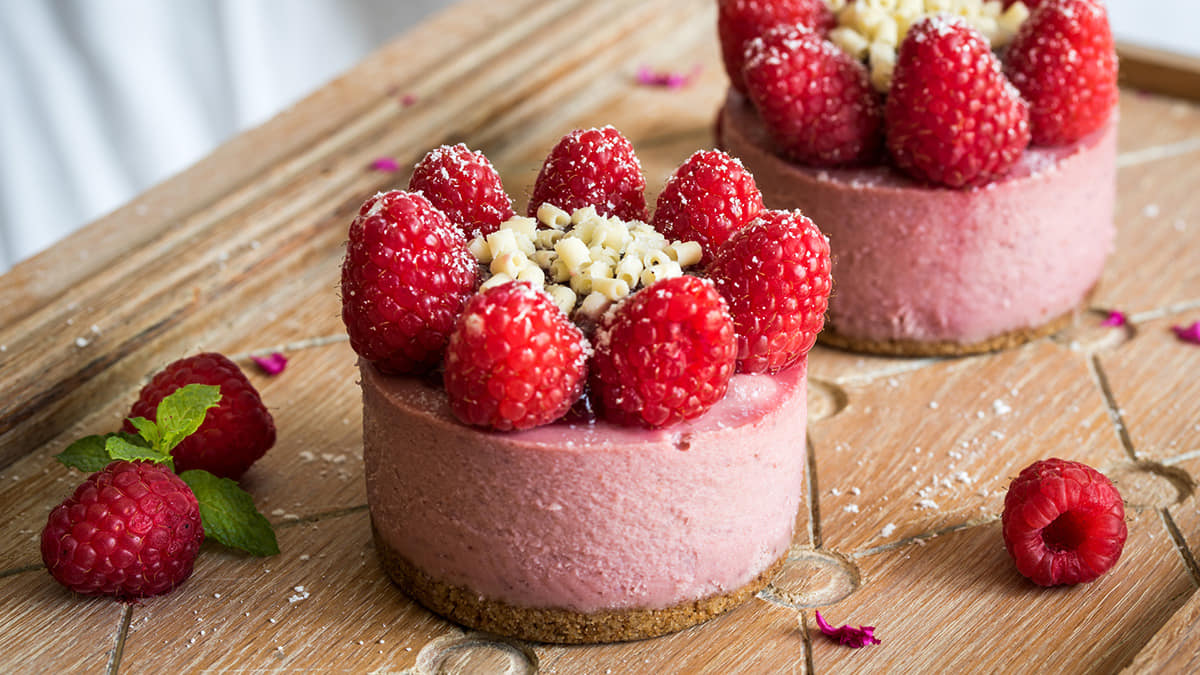
The worst thing that could happen is having a runny no bake cheesecake right before a birthday or a house party. It’s happened to me before so I know the feeling. That’s why we made this full troubleshooting guide on how to fix these common problems that everyone makes.
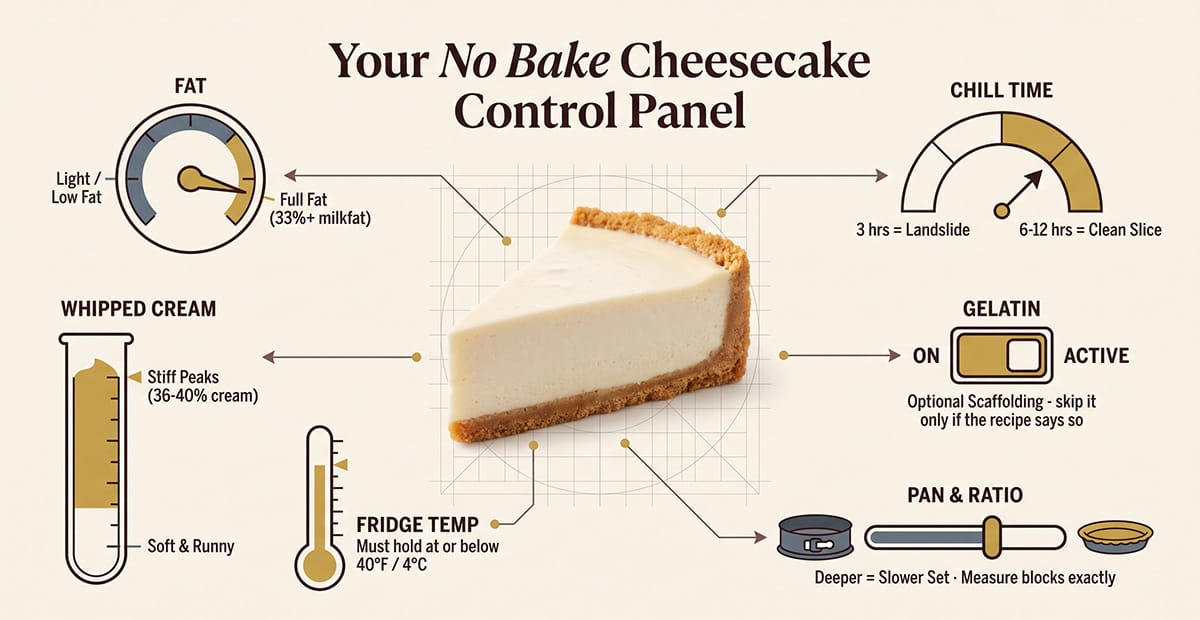
Here’s the short answer before we go any further. A no bake cheese cake usually fails to set for one of five reasons.
1) Not enough chill time.
2) Low fat or “light” cream cheese instead of full fat.
3) Cream that wasn’t whipped properly enough.
4) Missing gelatin in a recipe that actually needs it.
5) Or a filling ratio thrown off by measuring in a rush.
Fix the one that applies to your batch and the rest of your cheesecakes should firm up just fine. That’s the quick version. If you want to know exactly why each of these things matters and how to spot which one ruined your dessert, keep reading. We’ll go through the science in easy language. No lab coat required.
What’s Actually Happening Inside The Bowl?
A no bake cheesecake doesn’t set the way a baked one does. There’s no egg protein cooking and firming up in the oven. Instead the whole structure relies on cold fat. Cream cheese fat and whipped cream fat both firm up as they chill and that firming action is what holds your slice together.
This is why temperature does so much of the heavy lifting here. Warm fat is soft and loose while cold fat is firm and stable. If anything in your process keeps the fat from getting properly cold the cake stays too soft to hold it’s shape. The same thing happens if there simply isn’t enough fat in the mix to begin with no matter how long you wait.
Mixing cold cream cheese is also a recipe for disaster. It creates tiny lumps that never fully blend. This leaves you with a grainy and soft texture. Let your ingredients sit on the counter for an hour before you start to get them to room temperature. Another common mistake people make easily as this will give you a smooth lump free batter. Room temp cheese blends smoothly with sugar. This creates a uniform base that bonds better once it’s refrigerated.
Is Low Fat Cream Cheese The Real Problem?
Cream cheese is the backbone of the whole dessert so it’s worth getting it right first. In the United States cream cheese has to meet a federal rulebook before it can even use that name on the label. Regular cream cheese must contain at least 33 percent milkfat and no more than 55 percent moisture. Neufchâtel which is often sold as the “light” option only needs 20 to 33 percent milkfat and can carry moisture all the way up to 65 percent.
That 10 point jump in allowed water is the whole story right there. More water means less structure once the mix hits the fridge. In the UK you’ll see the same idea under different branding. “Light” soft cheese tubs are sold there as the lower calorie swap for baking and desserts.
I always prefer to grab a tub of original full fat Philadelphia for solid consistency in our desserts as opposed to the lower fat options in the supermarket.
None of this means you can never use a lighter option. It just changes how you need to balance the rest of the recipe to make up for the missing fat. If this is the part of your cheesecake puzzle you’re stuck on don’t worry we got you covered. Our article called does low fat cream cheese work in cheesecake walks you through which swaps hold up and which ones turn into a soupy texture.
Do You Actually Need Gelatin For This To Work?
Some no bake cheesecake recipes lean entirely on whipped cream and cold cream cheese to hold their shape. Others call for a small amount of gelatin or agar as backup structure, almost like scaffolding hidden inside the filling. If your recipe includes a stabilizer and you skipped it because you didn’t have any on hand, that’s very likely your answer.
Gelatin isn’t always required though. Plenty of classic no bake recipes never use a drop of it and still slice perfectly. The trick is knowing when a recipe genuinely needs that extra support and when it’s only there for an extra firm slice. We cover the full comparison along with a few plant based swaps in our guide on whether you need gelatin for no bake cheesecake.
How Long Should A No Bake Cheesecake Chill?
This is the mistake almost everyone makes at least once (this happened to us too!). This isn’t like a jelly that sets in an hour. The filling needs real time in the fridge for the fats to thicken back up. Any gelatin in the mixture also needs that time to fully bind.
Cutting into it after two or three hours is a bit like judging a marathon runner at the one mile mark. Give it more time and the whole picture changes. Most bakers find that somewhere between 6 and 12 hours makes the difference between a wobbly mess and clean bakery style slices. If you want exact numbers rather than a rough guess, we’ve done the digging for you. Our detailed timing guide on how long no bake cheesecake takes to set breaks down refrigeration times by pan size and recipe type.
Another easy mistake we’ve seen people make is they pour in their mixture into the biscuit base before it’s had time to set properly. You need to let it sit and harden in the fridge first. Don’t skip this step thinking that the crust looks hard enough when you press it. What we try and do is just make the base earlier in the day, then let it harden up properly for around 2 hours but a minimum of 30 minutes. Patience really is key here but the end result will be worth it I promise!
Did You Whip The Cream Enough?
If your recipe calls for folding in heavy whipping cream this step carries more weight than people expect. Cream needs a minimum fat content of around 30 percent just to whip at all. Below that line no amount of whisking will build structure since there simply isn’t enough fat to trap the air. Standard heavy cream sold in the US sits at 36 to 40 percent milkfat. That’s exactly why recipes ask for it by name instead of just “cream.”
We’ve found that you got to be careful not to overmix your heavy cream. You want to reach stiff peaks that stand up on their own. If you beat the mixture for too long the fat starts to turn into butter. This breaks the structure and makes the filling too runny. Stop the mixer the moment the cream looks thick and holds its shape. Gently fold this into your cheese base to keep the air inside.
What we’ve found from our tests is try to keep your kitchen cool while you work. Using a chilled metal bowl for whipping the heavy cream helps significantly. Cold tools keep the fat stable so the mixture stays thick and fluffy.
Why Won’t My Graham Cracker Crust Stay Together?
Sometimes the filling sets perfectly and the real issue is a crust that won’t hold, crumbling the moment you try to lift a slice. This isn’t the same chemistry as a runny filling but it feels just as frustrating when your cheesecake still falls apart on the plate.
Usually it comes down to the butter to crumb ratio or not pressing the mixture firmly enough before chilling. Our guide on why a graham cracker crust won’t stay together covers the exact fixes from crumb size to pressing technique.
For our readers from the UK and Australia you can use digestive biscuits as a great alternative for your base which makes an excellent crust.
Is Your Fridge Actually Cold Enough?
Here’s a detail most people never think to check. Food safety agencies in the US define the “danger zone” as anywhere between 40°F and 140°F. Inside that range bacteria can double in number in as little as 20 minutes.
Refrigerators are meant to sit at or below 40°F. A fridge that’s too crowded or one with a worn door seal can easily run warmer without anyone noticing.
That matters here for a very boring reason. Cream cheese and whipped cream both firm up through cold fat crystallization. That process slows down noticeably if the air around your cheese cake never gets properly cold. A cheap fridge thermometer costs less than a coffee and tells you in seconds whether your fridge is actually doing its job.
Does Pan Size Change Anything?
A deep 6 inch springform pan and a shallow 10 inch tart tin hold the exact same amount of filling very differently. The deeper the layer of filling the longer it takes for the chill to reach all the way to the center. This is basic physics rather than anything mysterious and the same reason a thick roast takes longer to cook through than a thin steak.
If you’ve followed a recipe exactly and it still seems softer in the middle than the edges, check your pan. Does it match what the recipe was actually written for? Swapping to a shallower wider pan is one of the simplest fixes you can try to fix structural integrity. It shortens the distance the cold air has to travel to firm up the center.
What About Mascarpone Or Other Substitute Ingredients?
Mascarpone, ricotta and Greek yogurt all show up in no bake recipes as cream cheese substitutes and each one behaves differently once chilled. Mascarpone is higher in fat than cream cheese and often sets even firmer. Ricotta carries more water and a looser curd structure so it tends to need extra help from whipped cream or a setting agent. Greek yogurt brings tang and protein but very little fat which is why yogurt based “cheesecakes” almost always lean on gelatin to prevent a soft set.
Swapping one of these in without adjusting anything else in the recipe is a common reason a trusted formula suddenly stops working.
What If You Measured Something Wrong?
Here’s a bit of kitchen trivia worth knowing. A huge number of “this recipe doesn’t work” complaints trace back to a simple measuring mix up. A classic example is using one block of cream cheese instead of the two the recipe calls for. It sounds almost too simple to be the culprit. Readers report this constantly in recipe reviews and it turns a perfectly good formula into gloopy texture every time. Before blaming the method double check the amounts against what’s actually sitting in your mixing bowl. You can also use our free kitchen measurement conversation tools to help you measure things more accurately.
What Do You Do If It’s Already Too Late?
If your cheesecake is sitting in the fridge right now looking more like a dip than a dessert don’t toss it. There are several practical ways to rescue a runny batch. These range from adding a quick gelatin boost to popping the whole thing in the freezer for a firmer texture. Our companion guide on 7 ways to fix a runny cheesecake goes through each rescue method in order starting with the fastest fixes first.
Speaking of the freezer, plenty of home bakers use it as a shortcut rather than a last resort. Maybe you’re wondering whether freezing changes the texture. Or maybe you just want to prep a whole cheesecake ahead of time. Either way our troubleshooting guide on whether you can freeze no bake cheesecake answers that in full. It covers how long it keeps and how to thaw it without a soggy graham cracker crust.
A Quick Real World Example
A reader once wrote in after her cheesecake failed for a dinner party. She realized afterward that her fridge had been left slightly open overnight by a curious toddler. That kept the whole thing several degrees warmer than it should have been. It’s a good reminder that setting problems aren’t always about the recipe itself.
Sometimes it’s the environment around it. A warm kitchen in summer can do it. So can a fridge packed too full for cold air to circulate or a shelf near the door that never gets properly cold.
I’ve made the same mistake myself with a shelf that sat right against the door. It was clearly closer to room temperature than the rest of the fridge. Once I moved my cheesecakes to the back shelf the wobbly slices stopped happening entirely.
The Fast Diagnostic Checklist
If you’re short on time run through this list before your next attempt.
- Full fat cream cheese, not the light or whipped tub version
- Cream whipped to stiff peaks if the recipe calls for it
- Gelatin included and properly bloomed if the recipe uses it
- At least 6 hours of chill time, ideally overnight
- Correct quantities measured out, especially full fat cream cheese blocks
- A fridge that’s actually holding at or below 40°F
- A pan size that matches what the recipe was written for
Tick all seven and your filling has everything it needs for the best structural integrity.
Frequently Asked Questions
Eight hours is usually enough for most recipes so if it’s still soft check the cream cheese type first. Light or low fat versions carry more water and less fat which slows down your sweet treat from thickening up. Underwhipped heavy cream is the second most common cause.
Yes in most cases. Options include folding in a small amount of bloomed gelatin, chilling it longer or moving it to the freezer for a firmer bite. Our guide on fixing a runny cheese cake covers each method step by step.
Here is a useful thickening hack that can help you save a dessert disaster. If your mixture looks like soup don’t panic yet lol. You can often rescue a soft batter by adding a stabilizer. Whisking in a little bit of instant pudding mix can work wonders. The starch in the pudding absorbs excess liquid quickly. Alternatively, you can try folding in more stiffly whipped cream. This adds extra body without ruining the flavour of your hard work.
Many recipes rely only on chilled cream cheese and whipped cream for structure. Others are written specifically around gelatin as a backup so it depends on the recipe itself rather than the dessert type as a whole.
Check the label for milkfat percentage first. Words like light, reduced fat or Neufchâtel all signal a lower fat and higher moisture product than standard cream cheese.
Final Thoughts
No bake cheesecakes have a reputation for being the easy option and most of the time it is. The handful of times it goes wrong almost always trace back to one of the points above rather than bad luck or a broken recipe. Once you know what each ingredient is doing in the chilled bowl the whole process gets a lot less mysterious. That goes for the fat in the cream cheese, the air in the whipped cream, all of it. The result is a process that’s a lot more predictable.
So the next time your no bake cheesecake doesn’t set you’ll know exactly where to look first instead of guessing. For anyone dealing with a specific piece of this puzzle the linked guides in this article series above go deeper into each topic. Maybe it’s a soggy bottom. Maybe it’s a jiggly runny filling that’s still soft after hours in the fridge or a question about swapping ingredients. Between them you should be able to fix any cake that refuses to set for good.