



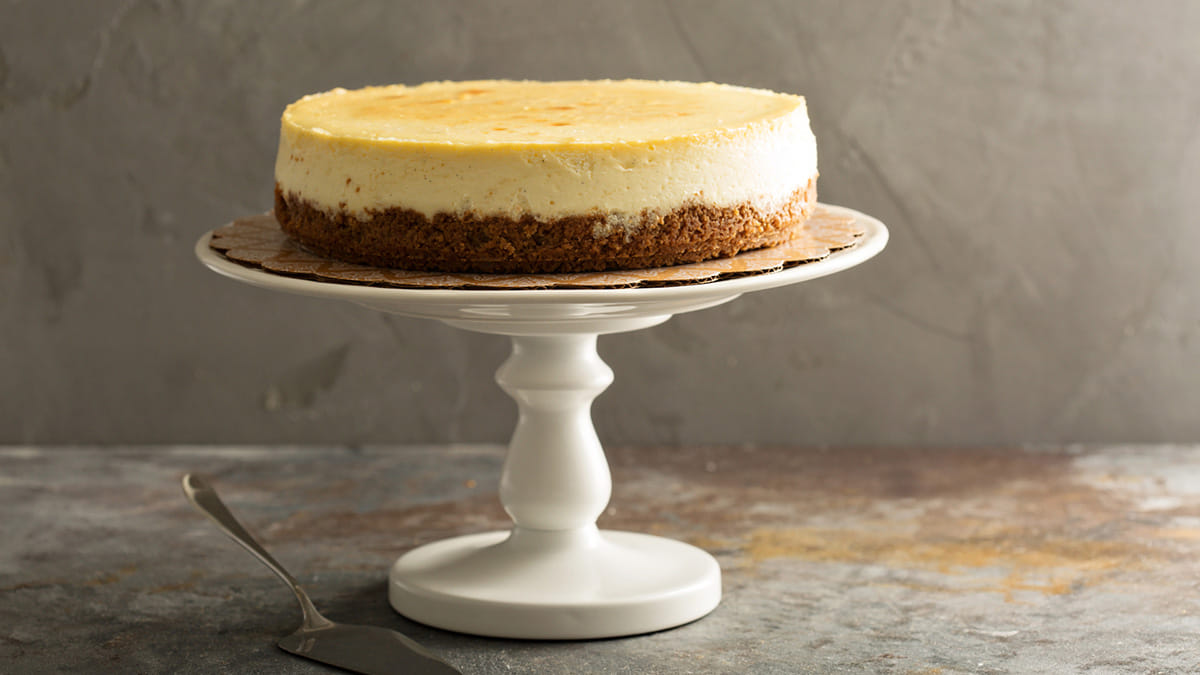
Gelatin isn’t a strict requirement for a no bake cheesecake. A filling can set just fine using cold fat from cream cheese and whipped cream alone. It simply adds extra hold. It keeps a dessert nice and firm even when the kitchen is warm or the recipe is packed with heavy mix-ins. The real question isn’t whether you need it. It’s whether your particular filling can hold its shape without that extra support.
Let’s walk through exactly when gelatin matters and when you can leave it out completely.
What Does Gelatin Actually Do In A No Bake Filling?
Gelatin is a protein that’s collagen derived. Once it’s dissolved and chilled it forms a loose web through the mixture. That web traps liquid and air. This is what keeps a soft filling from slumping once it’s out of the mold.
Food scientists call this by a fancy name but just picture it as scaffolding that props everything up from the inside.
There’s also a neat detail behind why gelatin desserts feel so smooth. It melts at around body temperature. That’s why a properly set filling feels firm on the plate but turns soft and creamy the moment it hits your mouth. That’s not an accident. It’s the exact same science behind panna cotta and mousse.
Why Do Some Recipes Skip It Completely?
Plenty of classic recipes never call for gelatin at all (most of ours don’t for good reason) and there’s a simple reason why. Fat does most of the real work here adding creaminess.
Cream cheese and whipped cream both firm up as they chill. Cold fat becomes solid and solid fat holds its shape. If your filling has enough of it, that alone can be enough for clean sliceable pieces straight from the fridge.
This is why old school diner style cheesecakes never bothered with an extra binding agent. Plenty of simple family recipes handed down for generations skip it too. There really is beauty in simplicity as they say!
When Can You Leave Gelatin Out Safely?
You’re usually fine skipping it if:
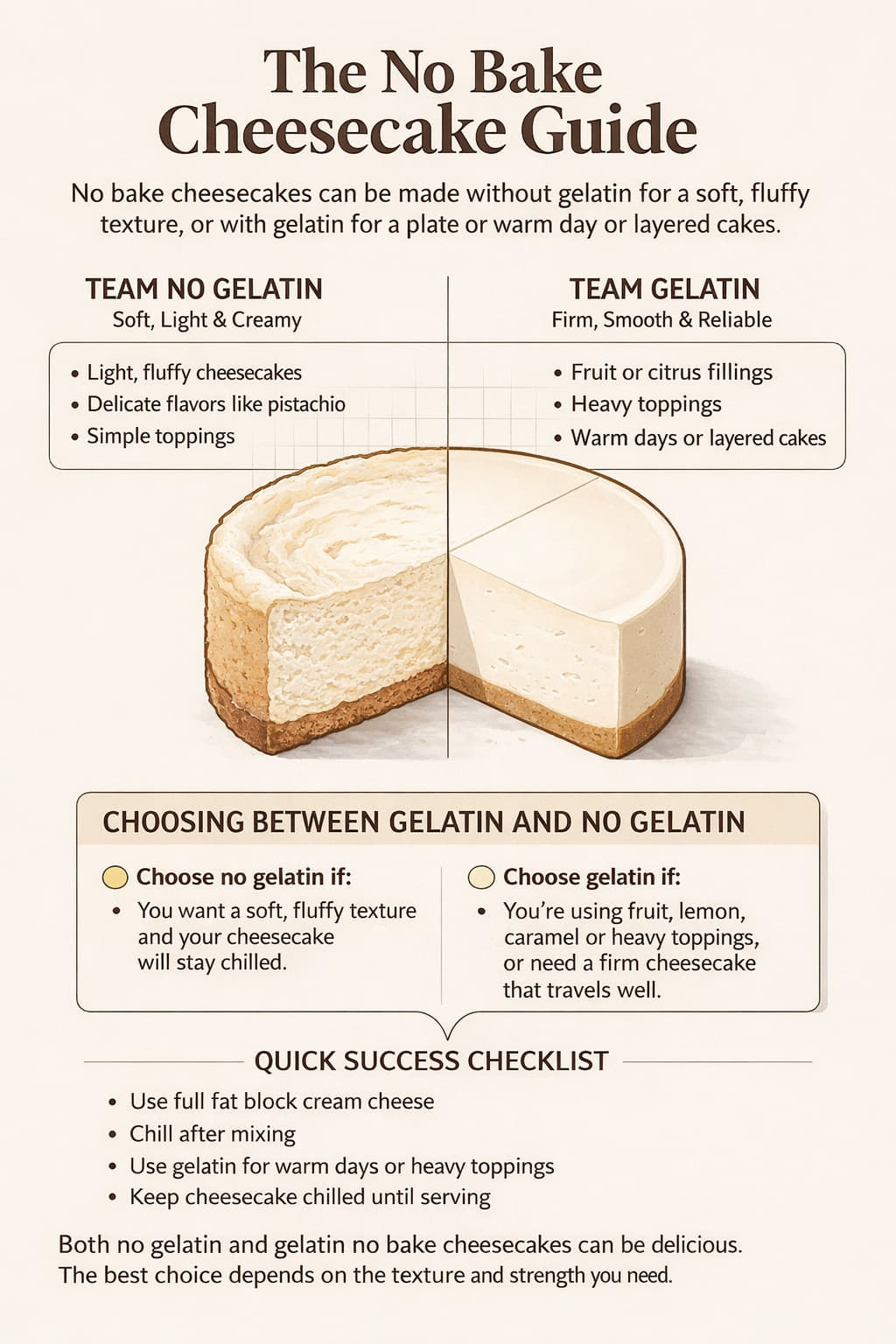
- You’re using full fat block cream cheese, not the softer tub kind
- Your recipe folds in whipped cream or whipped double cream
- You’re chilling the filling for at least 6 hours, ideally overnight
- The dessert stays in the fridge right up until it’s served
Tick those boxes and basic chemistry does all the hard work for you. Cold plus fat equals structure. It really is that straightforward.
Why Would You Actually Need Gelatin For No Bake Cheesecake?
There are a few situations where skipping it becomes a genuine gamble rather than just a style choice.
Say your filling includes a lot of liquid like fruit puree, lemon juice or melted chocolate. If that chocolate hasn’t cooled down properly then the extra moisture can thin the whole mixture out. Gelatin tightens the structure back up. It stops the dessert filling from staying loose and soft.
Warm weather changes everything too. A filling that’s rock solid in a cool 65°F kitchen can turn soft within minutes at a summer picnic. Push that temperature closer to 85°F and things can start to go bad faster. If your dessert is heading somewhere warm even briefly then gelatin gives you a safety net worth having with extra stability.
It’s also worth adding if you’re stacking layers or piling on a heavy topping. The same goes for transporting a dessert to a party or bake sale. That extra hold means less risk of everything slumping on the drive over.
Caramel toppings are a great real world example of this which we learnt from making various times. Caramel sauce is heavy. Over time it can slowly sink into a soft filling dragging the texture down with it. A touch of gelatine in the base gives the layer enough backbone to support that weight properly. Our apple and caramel no bake cheesecake recipe uses exactly this approach. It keeps each layer distinct instead of letting everything blend into a sticky puddle by the next day.
How Much Gelatin Should You Actually Use?
Most no bake cheesecake recipes use somewhere between 1 and 2 teaspoons of powdered gelatin per standard 8 or 9 inch cheese cakes. That’s usually enough to firm things up without turning the filling bouncy or increasing gumminess.
Bloom it first. This just means sprinkling the powder over a small amount of cold water and letting it sit for about five minutes until it turns spongy. From there gently melt it in short bursts in the microwave or over a low pan of simmering water. Stir it into a small portion of your filling then incorporate that back into the rest.
Skipping the bloom step is one of the most common reasons a gelatin based cheesecake ends up with little rubbery lumps running through it. Just a few extra minutes of patience here makes such a big difference to your cakes final texture.
How Long Can A No Bake Dessert Safely Sit Out?
This is where gelatin can genuinely matter for more than just texture. It also ties into food safety.
According to USDA food safety guidelines dairy based desserts should never sit at room temperature for more than 2 hours. That window shrinks to just 1 hour once the temperature climbs above 90°F. This kind of heat is common at summer cookouts across the United States. It shows up during hotter outdoor gatherings here in the UK too especially during peak summer.
A firmer filling holds its shape better within that window. It won’t stop bacteria from growing since only proper chilling does that. What it does mean is that your cheesecake still looks presentable if serving takes a little longer than you planned. Set a timer, refrigerate promptly and don’t leave any dairy desserts sitting out just in case someone wants a second slice later.
So What Alternatives Can You Use Instead?
Gelatine is made from animal collagen so it probably won’t be an option for vegetarian or vegan guests. Agar agar is the usual substitute and it comes from seaweed rather than any animal source.
Agar agar behaves quite differently though. It sets at room temperature rather than needing the fridge and it firms up considerably faster than gelatin does. It also creates a denser structure so you’ll want to use noticeably less of it. Overdo the amount and it can turn rubbery quickly.
Cornstarch is another option that bakers reach for mainly for a light thickening boost. It won’t give you the same clean, sliceable structure that gelatin or agar agar provides. Treat it as a backup option ideally rather than a direct swap.
If you’d rather skip a gelling agent entirely then you may wanna lean harder on whipped cream and full fat cream cheese. Then give the filling plenty of time in the fridge. Patience does most of the hard work here and it costs nothing extra.
A lighter filling like our pistachio cheesecake recipe often works beautifully without any gelatin at all. The nutty flavour stays front and center instead of competing with a firmer more rubbery bite.
Does Gelatine Change How A Cheesecake Tastes?
Not really and that’s part of why it’s such a popular choice among bakers. Unflavoured gelatin has almost no taste of its own once it’s dissolved nicely.
What it can change is silky mouthfeel. A cheesecake made without any setting agent tends to feel softer and slightly airier, bit like a mousse. Add gelatin into it and the texture becomes denser and holds a cleaner edge when sliced. Neither version is wrong. It just really comes down to the type of texture you’re chasing.
How Do You Decide Which Way To Go?
Ask yourself two quick questions before you start mixing.
First, how warm will the room be when this gets served? Second, how heavy or wet are the ingredients going into the filling? If either answer leans toward “not ideal” then I would say that gelatin is worth the extra five minutes of time it takes to bloom and stir in.
If you’re working with a lighter more delicate flavour then skipping it is often the better call. That’s especially true when you want the texture to stay soft and subtle.
Summary
Gelatin isn’t a rule but it is a tool you can reach for when needed. Why not use it when your filling runs wetter, heavier or is likely to face warm conditions. We suggest skipping it when you’re working with a simple well chilled, high fat mixture that’s staying in the fridge until serving time.
Either way the real secret to a firm cheesecake isn’t just about one single ingredient. It comes down to getting the balance of fat, liquid and chilling time right from the very start.
If your cheesecake still isn’t gelling properly no matter what you try, there are usually a handful of common culprits behind it. Check out our full troubleshooting guide on why your no bake cheesecake isn’t setting for a complete troubleshooting breakdown.