Vish G
August 23, 2026
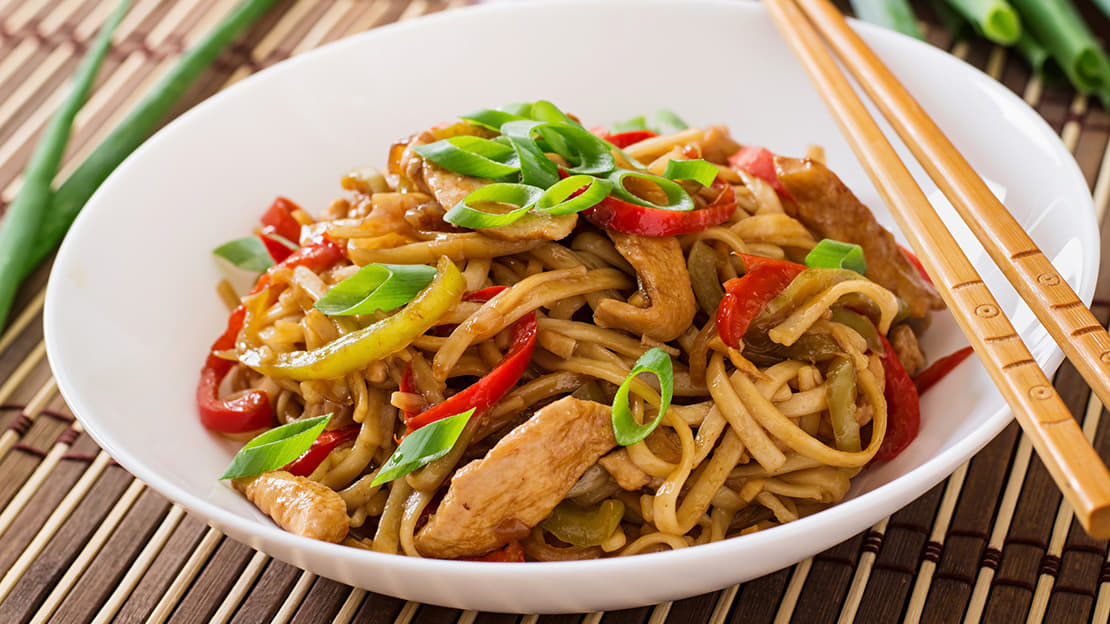
These Japanese style udon noodles will make dinner yummy again. A quick and tasty stir fried meal that will make you feel like you’ve grabbed an Asian restaurant takeout but better! A meal you can enjoy for afternoon lunch with juicy bites of chicken and mixed peppers cooked together with thick flavourful noodles. We like making dishes like this on a busy work night and brings back memories of travels in Asia whenever we eat them.
Pairing Suggestions
PREP TIME
12 MIN
COOK TIME
15 MIN
SERVINGS
2
Fresh or frozen udon noodles are the best choice for this recipe. They have the thick springy texture that makes yaki udon so satisfying, and they are much harder to overcook than some dried varieties. Frozen udon is particularly convenient because you can quickly loosen it before adding it to the pan.
If you are using frozen ones you only need to heat it long enough to separate the strands. Don't cook it until it is completely soft before stir frying. Drain it very well then add it to the hot pan near the end of your cooking.
Fresh vacuum packed udon works very well too. Dried udon can be used if that is all you have but cook it according to the packet instructions and drain it while it still has a little bite.
The most important thing is not the brand. It is making sure the noodles are loose and well drained before they go into the pan. That gives you nice chewy noodles rather than a watery sticky result.
The easiest way is to avoid fully cooking the noodles before stir frying them. For fresh or frozen udon heat them briefly just until they separate, then drain them thoroughly. Keep them to one side while you cook the chicken and vegetables. They only need a short time in the pan with the sauce.
A large hot frying pan also makes a big difference. If the pan is crowded then the ingredients release water and start steaming instead of frying. This can leave you with soft noodles and vegetables rather than the slightly browned chewy texture you want.
Letting the noodles sit against the hot pan for short periods before tossing them also helps develop a little colour without overcooking them. So the simple rule is:
Briefly loosen the noodles, drain them well, use a large hot pan and add the sauce near the end.
There is no single sauce that every yaki udon recipe uses. Japanese versions range from very simple soy sauce based seasonings to richer sauces containing dashi, mirin, sake and other savoury ingredients.
For this chicken version the combination of soy sauce, oyster sauce, mirin, sake, dashi and a little sugar gives you a really good balance from our experience.
The soy sauce provides salt and savoury flavour, dashi adds depth, mirin gives gentle sweetness and gloss while oyster sauce adds extra richness. A small amount of rice vinegar keeps all of that from tasting too heavy.
The important thing is not to use too much sauce. Yaki udon should have glossy well seasoned noodles rather than sitting in a pool of sauce. Some people have found that certain yaki udon sauces become too heavy or sweet particularly when dark soy or lots of sugar are used.
If you taste the finished noodles and think they need more seasoning then add a tiny splash of soy sauce rather than pouring in a lot of extra sauce.
Bell peppers work very well in yaki udon and are a particularly good match for chicken because their natural sweetness balances the savoury sauce.
Other vegetables that work beautifully include cabbage, carrots, onions, shiitake mushrooms, bean sprouts and sugar snap peas. For this particular recipe I would keep the peppers as one of the main vegetables rather than adding lots of different ingredients. Too many vegetables can release too much water and make the noodles less flavourful.
If you want to switch things up occasionally shiitake mushrooms would be my first addition. They bring a deep savoury flavour that works particularly well with the dashi and soy based sauce.
Yes. Chicken breast works perfectly well but chicken thigh is the more forgiving choice for this dish.
Chicken thigh contains more fat and stays juicy when cooked over the high heat needed for a good stir fry. That's the main reason why I recommend it in this version.
If you prefer chicken breast then cut it into small evenly sized pieces and avoid cooking it for longer than necessary. Patting it dry before it goes into the pan also helps it brown instead of releasing lots of moisture.
Cook the chicken until it is fully cooked through then remove it from the pan while you cook the vegetables and noodles. Adding it back right at the end prevents the chicken from sitting in the hot pan for too long.
Don't worry about chicken making the dish less authentic. Yaki udon is a flexible Japanese dish and chicken is a well established variation even though pork is a more traditional choice in many versions.
Yes although yaki udon is at its best immediately after cooking because the noodles have their best chewy texture when freshly stir fried.
If you have leftovers let them cool and put them into an airtight container in the refrigerator. For the best texture eat them within about 2 days. When reheating, a frying pan is preferable to simply microwaving the noodles. Add a small splash of water and a tiny amount of oil then warm them over medium heat while gently separating the noodles. The water helps loosen them and the oil stops them sticking.
You can microwave them if you are in a hurry but don't overheat them or they can become soft and chewy in the wrong way.
One useful trick is to reserve a little spring onion for after reheating. The fresh green onion brings back some of the freshness that can be lost when leftovers are warmed up.
Nutrition Facts
Calories
691
Total Fats
25.4 g
Saturated Fats
5.4 g
Cholesterol
138 mg
Sodium
792 mg
Total Carbohydrates
64.3 g
Sugars
9.5 g
Protein
41.2 g




Search our tested recipe collection!
From weeknight staples to show stopping desserts, all tried and re-tested.
How Did It Turn Out?
4.7 / 5. Vote count: 91
No votes so far! Be the first to rate this post.