Vish G
August 15, 2026
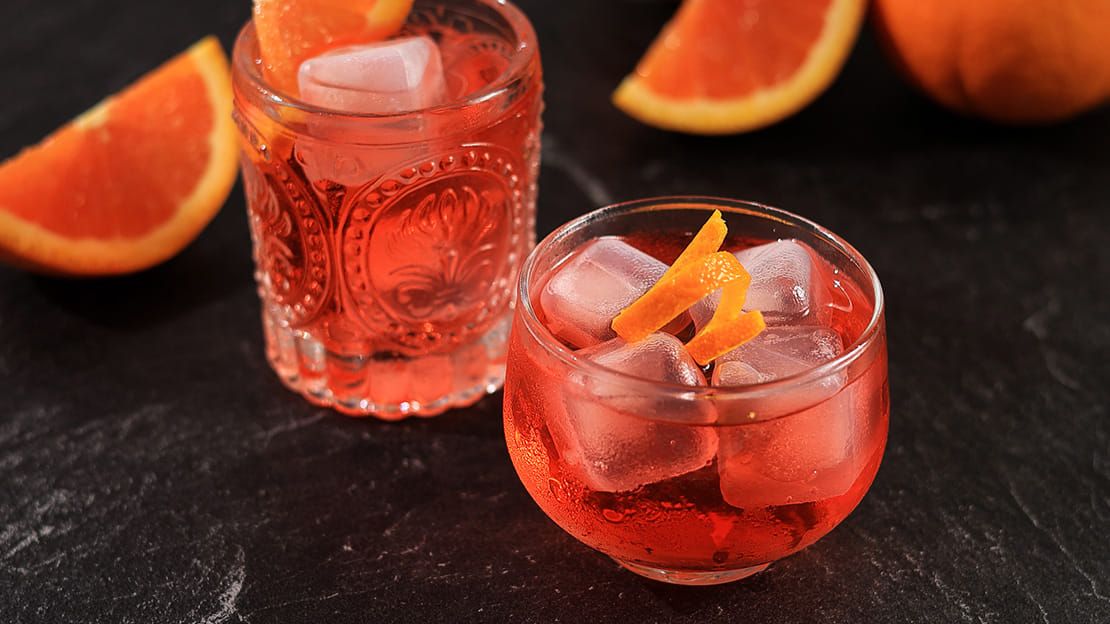
The classic Negroni cocktail recipe is going to become your new best friend. Just 4 simple ingredients is all it takes to make this fancy drink at home in just 2 minutes. When you combine Gin, Campari and sweet vermouth into a glass finished with fresh twist of orange, what you get is a sip full of flavours that will get you compliments for it’s unique taste. A great way to wind down on a hot summer evening to melt the stress away.
Pairing Suggestions
PREP TIME
3 MIN
COOK TIME
0 MIN
SERVINGS
1
The classic Negroni ratio is 1:1:1 using equal amounts of gin, Campari and sweet red vermouth. For one drink that's usually 30 ml (1 oz) of each ingredient. Campari itself uses this equal parts recipe and it's the traditional starting point.
For this recipe however, I prefer 50 ml gin, 25 ml Campari and 30 ml sweet vermouth. It gives the gin a little more room to shine while taking the edge off Campari's bitterness. This is not an unusual approach. Many experienced drinkers prefer a gin forward Negroni with ratios such as 1.5:1:1 or 2:1:1.
If you are new to Negroni's and find the classic equal parts version too bitter, increasing the gin slightly is one of the easiest ways to make it more approachable.
A London Dry gin is the safest choice. Look for one with a noticeable juniper character and a dry finish rather than a very delicate or heavily flavoured gin. Bartenders interviewed by Dan Murphy's consistently recommended traditional London Dry styles because the juniper gives the drink enough backbone to stand up to Campari and sweet vermouth.
Tanqueray and Beefeater are both excellent easy to find choices. Plymouth is another particularly good option if you want a slightly softer more rounded result. You don't need an expensive bottle to make a great Negroni drink.
The important thing is balance. A gin with extremely unusual or dominant flavours can fight with the Campari and vermouth instead of bringing everything together.
Use fresh sweet red vermouth sometimes labelled sweet, rosso or rouge. It provides the sweetness and herbal depth that balance Campari's bitterness.
Cocchi Storico Vermouth di Torino is an excellent choice for this recipe because it has enough richness and character without overwhelming the gin. Carpano Antica Formula is another popular option if you prefer a richer sweeter and more vanilla driven cocktail.
The freshness of the vermouth matters more than many people realise. Once opened keep it in the refrigerator and try not to leave it sitting on a warm shelf for months. Home bartenders regularly say that old vermouth is the reason a Negroni suddenly starts tasting unpleasant or strangely bitter. This is a good tip to remember.
If your drink tastes wrong despite using good ingredients, check the vermouth before changing the whole recipe.
The easiest way is to increase the gin slightly and make sure the drink is properly chilled and diluted.
If you are using equal parts and find Campari too overpowering, try 1.5 parts gin to 1 part Campari and 1 part vermouth. This ratio has received particularly strong support from home cocktail makers who originally found Negronis too bitter.
You can also stir the drink a little longer with plenty of ice. The added dilution softens the intensity and helps the three ingredients blend together.
Another option is to increase the vermouth slightly, although I would try more gin first for this particular recipe. Too much vermouth can make the drink sweeter and heavier rather than simply less bitter.
And remember that Campari is supposed to be bitter. If you absolutely dislike that flavour, replacing it with Aperol will make a much softer drink but it will no longer have the classic Negroni character.
A classic Negroni should be stirred with ice. Stirring chills the drink while adding a controlled amount of water from the melting ice. That dilution is important because gin, Campari and vermouth can taste harsh and overly concentrated when they are simply mixed together. Campari's own recipe builds the drink over ice while most traditional cocktail methods call for stirring.
For the easiest consistent result put all three ingredients into a glass or mixing jug filled with plenty of ice and stir for about 30 seconds. Then strain it over fresh ice.
There is some real debate among cocktail enthusiasts about shaking. Some people genuinely prefer a shaken Negroni because the extra dilution and aeration can make the bitterness seem softer.
For this recipe though stirring is the simplest and most reliable method.
The orange peel does much more than make the drink look pretty. The oils released from the orange peel add a fresh citrus aroma that balances the bitter and herbal flavours in the drink.
After cutting the peel, hold it over the finished Negroni with the orange side facing the drink and squeeze it firmly. This releases tiny droplets of orange oil across the surface. Then rub the peel around the rim and drop it into the glass.
This small step using the orange peel completely changes the drink. Professional bartenders also specifically recommend expressing orange oils over the finished cocktail.
For the best result use a fresh orange and a reasonably wide strip of peel. You want plenty of fragrant orange oil without a thick layer of bitter white pith.
Nutrition Facts
Calories
240
Total Fats
0 g
Saturated Fats
0 g
Cholesterol
0 mg
Sodium
0 mg
Total Carbohydrates
13 g
Sugars
12 g
Protein
0 g



Search our tested recipe collection!
From weeknight staples to show stopping desserts, all tried and re-tested.
How Did It Turn Out?
4.6 / 5. Vote count: 87
No votes so far! Be the first to rate this post.