



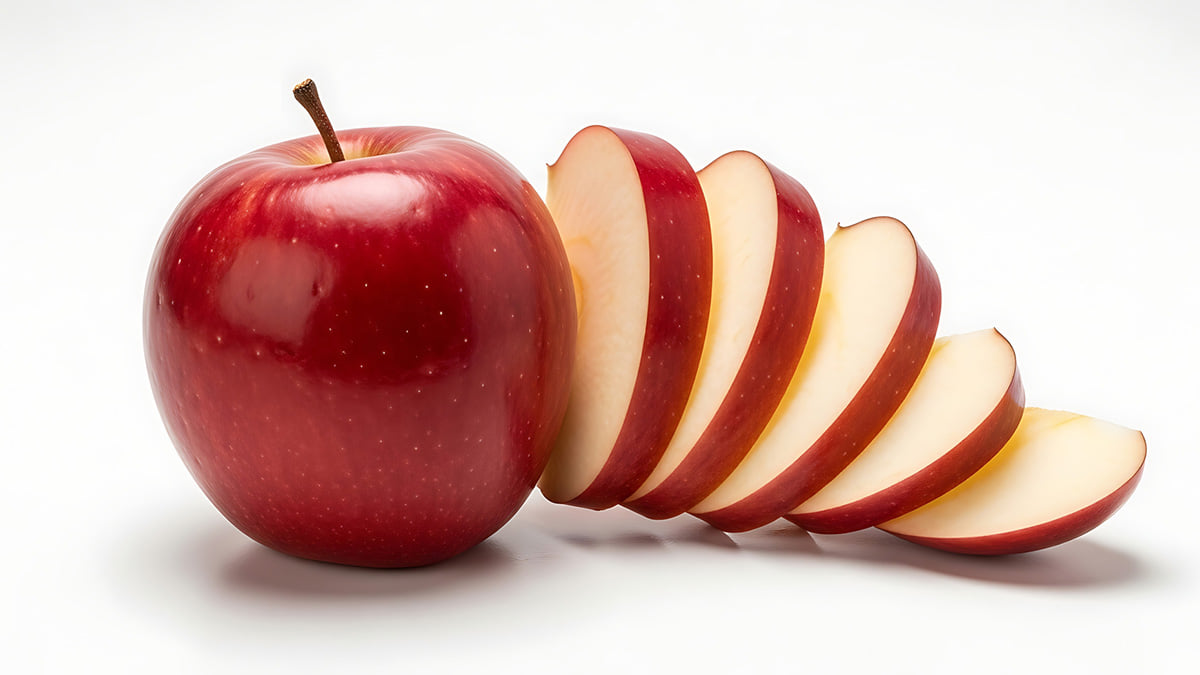
Short on time? Here is your answer. Soak your fruit slices in a mix of half a teaspoon of salt and one cup of cold water for 5 minutes. Rinse them off and pat them dry. This salty water bath is the easiest way to keep apple slices from browning and it works without a single drop of lemon juice.
I’ve used this trick for years when prepping snacks for kids and it never fails. No lemon needed and saves you running to the store just for one ingredient. No one likes eating fruit that’s started to go brown. So during the summer holidays of 2025 we did a kitchen test of our own to find out exactly what worked the best to slow down this oxidation process. We’ll go into more details about that below.
It’s not because your apple is going bad. It’s just air doing its thing.
Why Do Apple Slices Turn Brown Anyway?
The moment you slice into an apple skin you break open its cells. That releases an enzyme and the enzyme reacts with oxygen in the air. Left alone, an untreated wedge can start turning brown in as little as 15 minutes. That same reaction is what turns an open avocado or banana brown too.
The good news is that it’s harmless. It’s totally safe to eat. It just looks a lot less appetizing especially if you are packing fruit for a lunchbox or setting out a snack tray for guests.
Lemon juice has been the classic recommended fix for generations since its acid slows the reaction down. Not everyone keeps lemons on hand though. Plenty of people also don’t love that tangy aftertaste sitting on top of a sweet apple. Thankfully there are other tricks that get the same crisp ‘n’ fresh look.
What’s the Best Way to Keep Apple Slices From Browning?
Out of every trick out there, a simple salt water soak wins by a wide margin. It’s cheap, it’s fast and it actually outperforms lemon juice in side by side testing. This is what we found during our own personal kitchen experiments to see which ingredients performed the best to worst.
What you need:
1 cup of cold water
1/2 teaspoon of table salt or kosher salt
A bowl and a colander
Steps:
Stir the salt into the water until it disappears.
Drop your apple slices in.
Let them soak for 5 to 10 minutes.
Drain in a colander and rinse under cool running water.
Pat dry with a clean towel and store in an airtight container or bag.
Do this and your apples can stay looking freshly cut for up to 12 hours at room temperature. If you keep the chopped fruit in an airtight container in the fridge, we found they can stay fresh and still taste for 3 to 5 days. Personally I would say it’s better eaten fresh as possible before the third day.
In our own kitchen test we lined up 6 different methods side by side. The list included a control (no preservative), plain water, lemon juice, citric acid, honey and salt. The salt water bath came out on top with a perfect score beating lemon juice by a wide margin. Untreated apples in that same test started browning within 15 minutes. The salt soaked batch stayed bright for 12 hours straight. That works out to roughly 48 times longer before any browning showed up and the apples didn’t taste salty once they were rinsed.
Why Does Salt Water Stop Apples From Browning?
There is real food science behind this trick not just kitchen folklore.
Salt contains chloride and chloride blocks the enzyme responsible for browning in the first place. Turn off that enzyme and the whole browning process barely gets started.
Researchers testing halide salts on Granny Smith apples compared 4 different types, including chloride, phosphate, sulfate and nitrate. Chloride and phosphate came out on top as the strongest browning blockers of the bunch. In my own kitchen the results lined up with that research every single time I tried it. That is exactly why I now use salt water over lemon juice for anything I am prepping ahead of time.
Is Honey Water Just as Good?
If salt is not your thing honey comes in as a close second.
Mix one tablespoon of honey into a cup of room temperature water. Soak your apple slices for five minutes, rinse then store as usual. In that same kitchen showdown mentioned earlier, honey water kept apples fresh looking for about 12 hours too. It landed just behind salt water on the scoreboard.
Honey contains natural compounds that slow down the same browning enzyme that salt targets, just through a different path. One 2024 food science study found that honey coatings, when paired with other freshness treatments cut the activity of the browning enzyme by as much as 60%. That’s a serious number for something sitting in your pantry right now.
Rinsed properly, honey won’t leave your apples tasting sweet or sticky. It’s a solid backup if you already keep a jar around for tea or baking.
Just one quick safety note. Skip the honey trick for babies under one year old, since honey is not considered safe for little ones that young.
What Other Options Actually Work?
Plain water. Submerge your sliced apples in a bowl of cold water and keep them fully covered. This will not last nearly as long as salt or honey, usually somewhere between 4 and 6 hours. It needs zero extra ingredients though.
Vitamin C powder. Fruit Fresh, a product sold at most grocery stores is mostly ascorbic acid which is simply the scientific name for vitamin C. According to the University of Illinois Extension office, mixing a bit into water and dipping your apples works well. The effect fades faster than salt or honey though since the vitamin C gets used up as it works.
Citric acid. This sour powder often used in canning holds off browning for a long stretch, sometimes 12 hours or more. What we found from our own testing is that It can leave apples tasting sharp and tart even after a good rinse. This one works best on apple slices headed for the oven rather than a snack tray.
How Do You Use This for Meal Prep or Baking?
Picture a school morning. You are slicing apples for your kid’s lunchbox in the US or their packed lunch if you are in the UK and your already running behind schedule. Lemon juice means grabbing a lemon, cutting it, squeezing it and cleaning up a sticky counter afterward. A salt water dip takes the same 5 minutes using stuff already sitting in your cupboard.
This same trick works just as well for weekend meal prepping, packing apples for a picnic or getting a head start on a baking project. If you are slicing them in advance for something like our Apple and Caramel Cheesecake, a quick salty water bath keeps your topping looking picture perfect instead of dull by the time it reaches the table. The same trick comes in handy if you are getting ahead on our Apple Pie With Pie Filling, especially if you like slicing your fruit the night before baking day.
Does This Make The Fruit Slices Taste Salty?
We found this question asked a lot. Nope. Not from our tests even after giving the sliced up fruit to guests after the saline solution was rinsed off properly. A few people reported that they could taste a little saltiness only once we asked them about it.
Here is something most people forget. Salt works to enhance the flavour of food. So even if a there is a slight aftertaste it works well with the natural sweetness of the fruit to balance each other nicely! While the other ingredients like citric acid and lemon juice can leave more of an unwanted aftertaste that was more noticeable.
What Mistakes Should You Avoid?
Don’t skip the rinse step. Salt or honey left sitting on the surface too long can leave a faint taste behind.
Don’t go overboard with the salt thinking a stronger mix works better. Too little salt barely slows the browning process. A heavy hand doesn’t speed up results either. Stick close to the half teaspoon per cup ratio for the best outcome.
Don’t store treated apple slices uncovered in the fridge for too many days in a row either. Even the best method slows the reaction. None of them stop it forever.
The Bottom Line
Lemon juice is not the only trick worth trying and honestly, it’s not even the strongest one. If anything we found it be average at best. A simple salt water soak beats it in both taste and performance while honey water makes a tasty backup for anyone without salt handy.
Both options are cheap. Both are probably already sitting in your kitchen right now. Both take only a few minutes of hands on time.
Next time you need apple slices for a lunchbox, a party tray or getting a jump start on a dessert like a cheesecake or pie, skip the lemons and reach for the salt shaker instead. Your taste buds and your guests will notice the difference. This article is part of our Complete Guide to Baking With Apples for desserts series.