



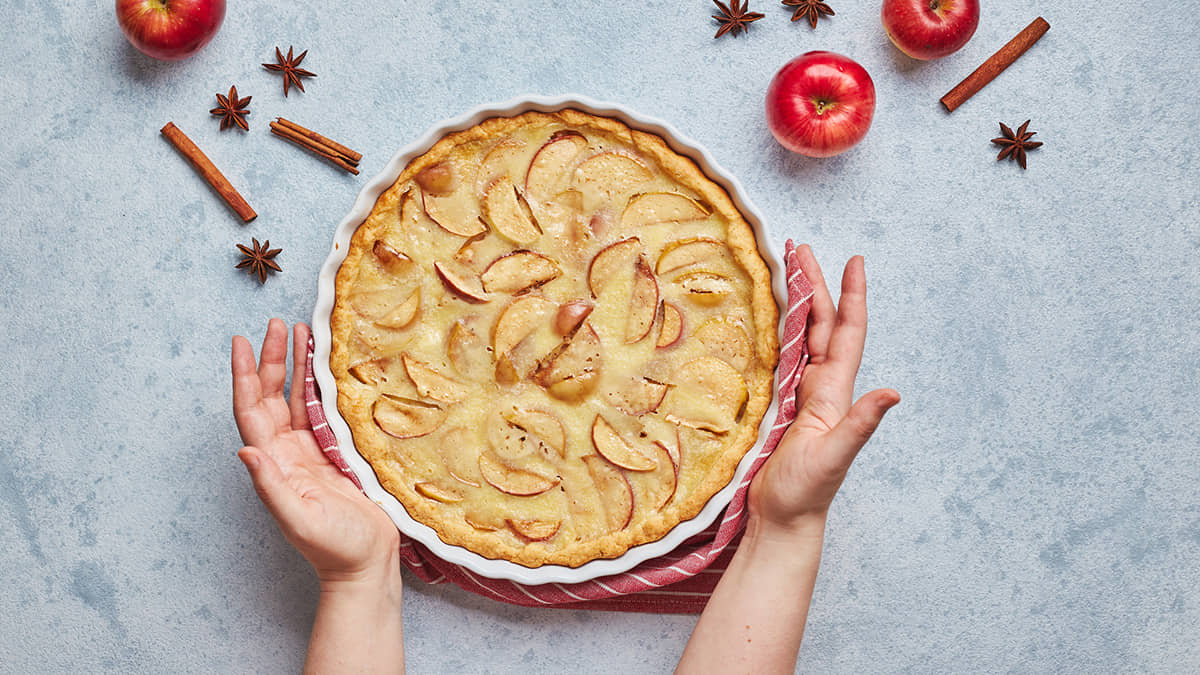
The last thing you want is juice flooding the plate when you cut a slice of apple pie. The crust might even look perfect on top but the bottom could still be a sad puddle. A watery pie filling like this is one of the most common apple pie complaints out there. In most cases it comes down to just 3 things.
1) You sliced the pie too soon.
2) You didn’t use enough thickener.
3) Steam got trapped under the crust with nowhere to go.
Fix those three and a soupy runny filling should never happen again.
I’ve baked and tested more apple pies than I can count over the years. The same handful of small mistakes keep showing up again and again. Let’s go through exactly why a watery pie happens first and then how you can stop it for good.
Is Your Pie Filling Actually Runny or Just Not Set Yet?
This is the mistake that trips up almost everyone. A mixture that looks runny straight out of the oven is often not broken at all. It just hasn’t finished setting yet.
Apples are made up of roughly 85% water. As they bake that water cooks out of the fruit. It blends with sugar and thickener to build the filling. While the pie is hot, that mixture stays thin and loose almost like syrup fresh off the stove. As the pie cools, the starch in your thickener firms up and grabs onto the liquid. That is the moment a loose runny filling turns into something you can actually slice cleanly.
This setting process takes real time and rushing it is the number one cause of a runny apple pie. Bakers from Vermont to Yorkshire run into the exact same problem. They cut a warm slice for a hungry family and wondered why the filling ran everywhere. In my experience the fix is simple. Give your dessert at least 4 hours to cool at room temperature before cutting it. Overnight is even better. A filling that looked like soup at 3pm can slice cleanly by dinner with no extra thickener needed at all.
How Much Cornstarch Do You Need to Thicken Pie Filling?
Here is a number that surprises a lot of home bakers. A single batch of sliced apples for one 9 inch pie can release nearly half a cup of liquid. That happens just from sitting with sugar for an hour before it has even seen the oven. Add in the extra juice that cooks out during baking. It becomes clear why a light dusting of flour rarely does the job on its own.
Different thickeners also carry very different strength. Swapping one for another at the same amount is a common way to end up with a runny pie filling. According to King Arthur Baking’s test kitchen, side by side trials found something worth noting. Fillings thickened with Instant ClearJel held their texture better than those made with plain cornstarch or flour. That advantage showed up in clarity and in resistance to turning watery again after cooling. The USDA’s Complete Guide to Home Canning also notes that many standard starches break down under heat. That breakdown produces a runny sauce consistency, which is part of why bakeries lean on modified starches for consistent results.
Here is roughly how much thickener you need for 8 medium apples, which works out to about 3 pounds.
All purpose flour – About 1/4 cup. Cheap and reliable though it can leave the filling a little cloudy.
Cornstarch – About 1 tablespoon plus 1 teaspoon. Clear and glossy but can turn watery again if the pie is frozen.
Tapioca (quick cooking) – About 2 tablespoons. Clear finish, needs 15 to 30 minutes to soften before baking
Instant ClearJel – About 1 tablespoon plus 1 teaspoon. Holds up in the freezer and through reheating without turning into a soggy mess.
If your usual recipe has let you down before, try adding 1 extra tablespoon of your regular thickener next time. I know It’s a small tweak but in my testing it solved a stubborn runny filling more often than any other single change.
Which Apples Cause the Most Runny Pie Filling?
Not all apples behave the same way in the oven. Some hold their shape and release very little liquid. Others practically dissolve into applesauce. They dump their water straight into your filling leaving you with a watery pie no matter how careful you were with the thickening agent.
Firm tart apples like Granny Smith, Honeycrisp and Braeburn are lower in moisture. They also carry more of a natural gel like substance called pectin which helps them keep their structure as they bake. Softer varieties such as McIntosh or Red Delicious break down fast and add a lot of extra liquid to the mix. Research from Science Friday’s kitchen testing found that Pink Lady, Braeburn and Honeycrisp all performed similarly to Granny Smith. All three held their shape through extended cooking far better than softer juicier varieties.
We tested a blend of two parts Granny Smith to one part Honeycrisp in our own kitchen. It gave us the best of both worlds. You get the tang and structure from one fruit plus natural sweetness from the other to compliment it. There is no pool of juice waiting at the bottom of the dish which is nice lol. That blend has become our go to whenever we want to avoid a runny pie filling without sacrificing flavour.
Why Does Steam Make Pie Filling Watery?
Here’s something most people never think about. As the pie bakes, the apples release steam. That steam needs somewhere to go. If your top crust is solid with only a few tiny fork pricks for vents, the steam gets trapped. It turns back into liquid and pools exactly where you don’t want it.
Cut a handful of proper slits into your top crust. Better yet, try a lattice design that lets air move freely the entire time it bakes. A crumble topping works even better for releasing steam since there is no solid barrier at all. This one small change fixes more cases of runny pie filling than most people realize.
Does Baking Time Affect a Runny Pie Filling?
I get this might sound too simple but pulling your pie out too early is a common cause of a watery filling. Starch needs to reach a specific temperature before it fully thickens. That moment doesn’t always line up with the crust turning golden brown which makes it an easy mistake.
Here is a trick worth remembering. Juice bubbling up through the vents in your crust is actually a good sign not a warning sign. It means the filling is finally hot enough to start thickening up properly. Once you spot that happening let the pie bake for roughly 10 more minutes. There is almost no such thing as overbaking an apple pie. Those extra minutes can be the difference between a runny slice and a clean one.
How Do You Fix a Pie That Is Already Runny?
Even if the pie has fully cooled and the filling is still runny you can still save it. It does take a few real steps so patience is key. Here is exactly what to do.
1) Open up the pie. Gently lift off the top crust in one piece or cut a section out if it is a lattice top. Set the crust aside on a plate so you can put it back later.
2) Scoop out the loose liquid. Use a spoon to pull out as much of the runny juice as you can from around the apples. Try not to remove the fruit itself. Aim to get out about half a cup, though the exact amount will vary depending on how watery the pie is.
3) Make a cornstarch slurry. In a small saucepan whisk 2 tablespoons of cornstarch into 2 tablespoons of cold water until smooth with no lumps.
4) Add the scooped liquid and cook it. Pour the runny juice into the same saucepan with the slurry. Heat over medium, whisking often until the mixture comes to a gentle boil and turns thick and glossy. From my experience this usually takes 2 to 3 minutes.
5) Cool slightly then pour it back over the apples. Let the thickened liquid sit for a minute or two so it’s not scorching hot. Then spoon it evenly back over the apple filling still sitting in the pie shell.
6) Put the top crust back on and pop the pie in the fridge for an hour or two to let everything set.
What Is the Real Cause of a Runny Apple Pie Filling?
A runny apple pie filling almost never means you did something disastrous. Usually it comes down to one small detail. Maybe you cut the slice too soon. Maybe you used a bit too little thickener, chose juicier apples, trapped steam under the crust or pulled the pie out before it finished setting. Fix even one or two of these and your next baked dessert should slice cleanly. The filling will hold together on the fork instead of running off the plate.
If you want a foolproof starting point then our easy apple pie recipe with a tested filling ratio is a great place to start. It walks you through the exact amounts and steps we use to keep the filling thick every single time. If you enjoy the flavour of apple pie but want a creamier custard style twist, our apple custard pie is also worth trying. The eggs and cream naturally help bind the filling and sidestep the runny pie problem altogether.
Want to fix more issues like runny pies? Check out our Full Guide to Baking With Apples for your desserts. You’ll find more tips on choosing the right fruit variety and getting consistent reliable results in every sweet treat you bake.