



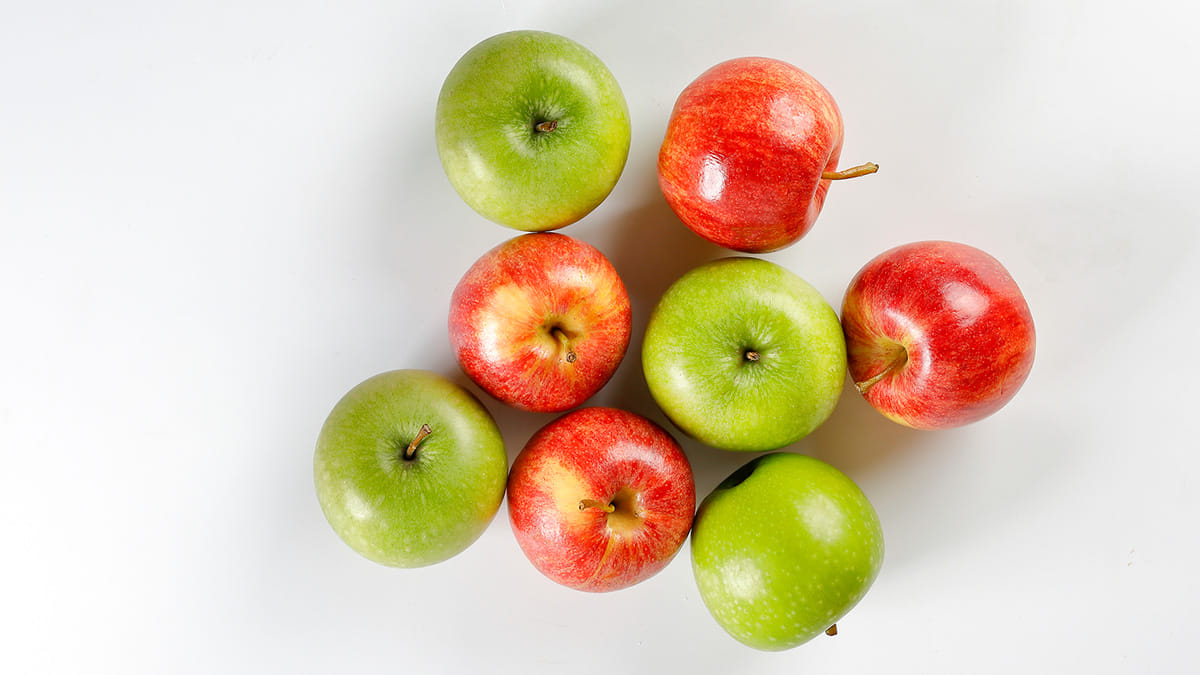
Here’s the short ‘n’ sweet answer before we get into the why. The best apples for baking are Granny Smith, Honeycrisp, Braeburn, Pink Lady and Jonagold because their flesh stays sturdy and holds its shape once it hits the oven. Red Delicious, McIntosh and regular Golden Delicious tend to break down and turn to sauce. If you remember that one thing I promise your next pie will already turn out more yum.
In my years of testing pie and crumble recipes for this blog, I’ve learned that the apple variety causes more baking disasters than a wrong oven temperature ever does. We ran a side by side bake off a while back using 6 different varieties in the same crumble recipe, same oven at the same time. The results lined up almost exactly with what food scientists have found in lab testing and that’s the part I want to walk you through here.
Why Do Some Apples Turn Mushy When Baked?
Think of an apple as a tiny water balloon held together by a natural glue called pectin. When heat hits the fruit that glue starts to soften and the walls holding everything together begin to break apart. How fast that happens depends on three things:
1) How much pectin is in the flesh
2) How acidic the apple is
3) How much water it’s carrying
Apples with more acid and a sturdier structure hold their shape longer under heat. Softer, sugary and moister varieties lose that structure quickly and pretty much collapse into sauce.
A study published in the journal Agriculturae Conspectus Scientificus measured this directly. The Granny Smith variety came in with a firmness reading of 6.4kg per square cm while a milder variety called Idared measured only 4.5. That’s roughly 40% softer and it shows up exactly the way you’d expect once both go in the oven.
Acid tells a similar story. The same study found Granny Smith carrying 0.69% malic acid, the zesty compound found in apples compared to just 0.45% in Idared. That’s about 53% more acid in the Granny Smith and it explains why the zingy varieties keep their bite and their shape while the mellower ones go mushy and a bit bland once cooked. Malic acid alone makes up around 94% of the total acid found in a typical apple so when food scientists talk about “acidity” they’re really talking about this one compound doing most of the work.
Water content matters too. Most apples are somewhere around 84 to 86% water but the juicier varieties push higher. That extra liquid has to go somewhere while your dessert bakes and often it ends up soaking your crust or turning your crumble topping soggy.
What Are the Best Apples for Baking?
Here’s the full rundown of the apples worth reaching for when your recipe calls for a pan, a pie dish or a tart shell.
Granny Smith – The go to pick for a reason. Bright green with a sharp tangy taste and built to survive a long bake without losing its shape. A Tyrolean storage study found that Granny Smith kept nearly all of its original firmness after weeks in storage, losing less than 5% while a variety called Jonagold lost as much as 27% over the same period. That tells you a lot about which fruit stands strong through heat and time without falling apart.
Honeycrisp – Moist without being watery and mellow with just enough bite to keep things interesting. It’s become one of my favourites for a crumble when I want something a little less sharp than Granny Smith but still solid enough to bake well.
Braeburn – Slightly spiced in flavour, sweet tart and dependable. This is the variety I choose when I want the apple taste itself to shine through instead of getting buried under sugar and cinnamon.
Pink Lady also sold as Cripps Pink – One of the densest apples you can buy. Lab testing’s recorded Pink Lady firmness as high as 8.9kg per square cm at harvest which is noticeably higher than Granny Smith. It’s sweeter too so it’s a nice middle ground if a fully tart pie isn’t your thing.
Jonagold – A cross between Jonathan and Golden Delicious that somehow inherited the best traits of both parents. Sugary with a lil tang and hearty enough to hold together. Just remember it softens faster in storage than Granny Smith or Pink Lady so use it closer to when you buy it.
Bramley – If you bake in the United Kingdom this is likely the apple already sitting in your fruit bowl every autumn. It’s sharply sour, holds up well and breaks down just enough at the edges to create that soft caramelized bite you want around firmer chunks. In the United States it’s tricky to find so Granny Smith is your closest swap.
Want to put this list straight to work? Our easy apple pie recipe leans on exactly this tart ‘n’ solid approach so every slice keeps its shape instead of turning into filling soup.
Which Apples Should You Avoid When Baking?
Red Delicious – Wonderful for snacking but disappointing in a pie dish. Low acid and a soft structure mean it turns grainy and bland once it’s spent time in the oven.
McIntosh – This apple basically wants to become sauce lol. It’s got a nice sharp bite when raw but the flesh starts out soft and collapses quickly under heat. Keep it for applesauce or apple butter just not for a pie where you want distinct slices.
Golden Delicious – Not a total disaster but it softens quickly and doesn’t bring much zing to the table. Fine for a rustic tart where some breakdown is expected but not the pick for a layered bake where you need the fruit to hold its form.
Gala and Fuji – Both are lovely eating apples but they carry a lot of water for their size. That extra juice can flood a crumble or a galette, especially one without a bottom crust to catch the runoff. If you do want to try a galette, stick with a firmer variety like Braeburn or Granny Smith so the filling stays put instead of pooling all over the pastry.
How Can You Tell If an Apple Will Hold Up in the Oven?
You don’t need a lab to figure this out. Here’s some quick tests I use in my own kitchen before using my apples for baking:
Press it gently. A good baking apple should feel dense and resist a little under your thumb. If it dents easily it’s likely too soft for the oven.
Take a bite. If it tastes sharp or zesty rather than purely sugary there’s a good chance it has the acid needed to hold its shape.
Check the skin colour and season. Fruits picked earlier in the season like Granny Smith tend to run sturdier and more acidic than late season sweet varieties.
When in doubt do a small test bake. Slice one and cook it for 15 minutes at 375°F and see whether it holds its shape or breaks down. This takes ten minutes and saves you from ruining an entire dessert later.
Should You Mix Apple Varieties When Baking?
Here’s a trick most bakeries use that people rarely talk about. Blending a sturdy tangy apple with a softer sweeter one instead of relying on just one variety. This is something that I do during a dessert emergency lol.
Start with a base of about 60% firm tangy apples such as Granny Smith or Braeburn.
Add roughly 40% of a sweeter variety like Honeycrisp or Golden Delicious.
Slice everything to a similar thickness so the pieces cook at the same rate.
You end up with the structure of the sturdier fruit and the honey like flavour of the other plus a more interesting texture since every bite isn’t identical. Bakeries in both the US and the UK use this blending trick constantly even when the label on the dessert simply says “apple.”
Do Organic Apples Bake Differently Than Regular Ones?
Not really. A comparison published in the Athens Journal of Sciences looked at organic versus regular apples and found the differences came down to sugar content and mineral levels not the texture or acid levels that actually determine how well an apple bakes. Texture and tartness come from the variety itself. So an organic Red Delicious will still turn soft in the oven and an organic Granny Smith will still hold its shape.
Quick Answers
Yes though expect softer results and a milder taste. If a sugary soft variety is all you’ve got then a splash of lemon juice adds acidity and firms things up slightly too.
Not necessarily. A single reliable apple like Granny Smith gives consistent results every time but blending two or three varieties usually produces the most well rounded flavour and texture.
Some vitamin C is lost to heat but fiber and most minerals stay intact so a baked apple dessert still has some nutritional upside over plenty of other treats.
My Final Thoughts
Choosing the right apples for baking really is the difference between a pie that keeps its shape and one that turns into mush. Once you’ve picked your variety, a classic slice is hard to beat. If you’d rather skip the crimped crust altogether then our apple galette recipe is a more relaxed rustic option that still shows off a firm well balanced fruit beautifully.
For the complete picture on choosing the right apples for baking, from prepping and storing to matching each variety with the right dessert, check out our full guide to baking with apples for desserts.