



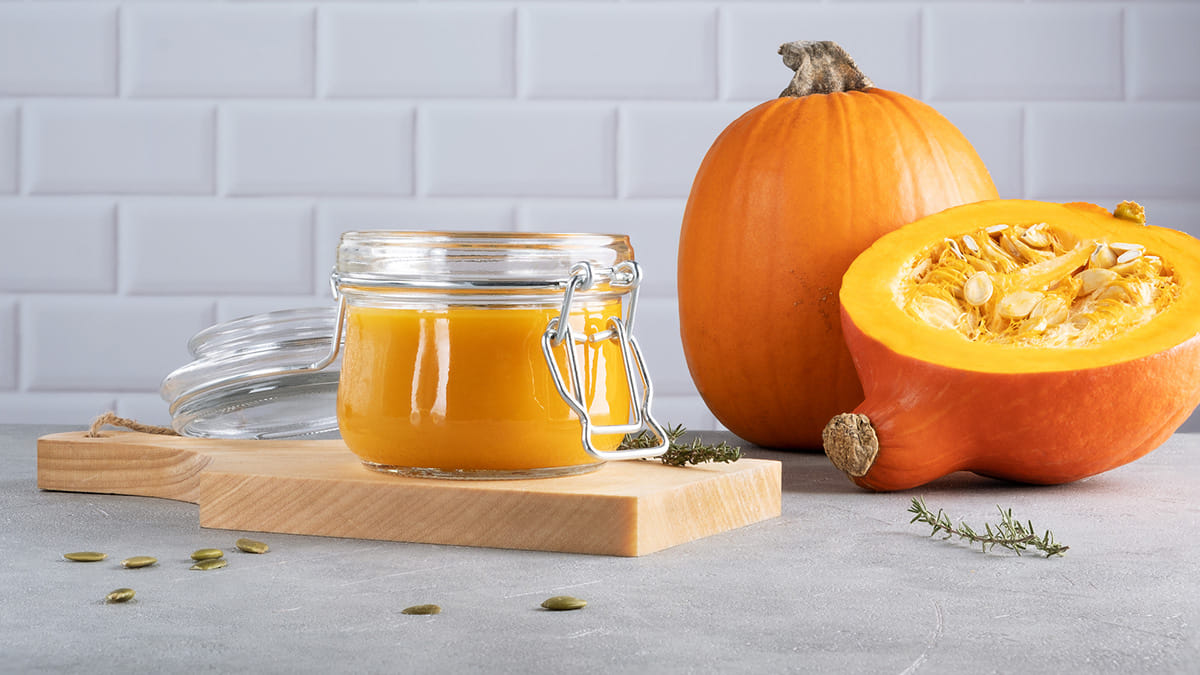
Canned pumpkin is cooked mashed flesh with nothing else added. Pumpkin pie filling is that same puree but with sugar, salt and spices already mixed in. That one difference decides whether your muffins taste just right or like a candy bar.
You grab a can at the store. You pour it into your batter. You taste it and yikes it’s way too sweet! A lot of us home bakers have been there.
You’ll see just how simple the fix for this is. Once you know what sits inside each tin you’ll pick the right one every time. Want more fall ideas when you finish? Peek at our full article in this series on Pumpkin Spice Season’s Ultimate Fall Recipe Guide.
What Is Canned Pumpkin?
This pantry staple goes by a few names. You’ll see puree, purée or solid pack on labels. Flip the can over and read the ingredients. You should see a single item and that is pumpkin. Libby’s, one of the biggest brands in the United States says on its FAQ page that its solid pack has no salt, no sugar, no artificial flavours and no preservatives. Solid pack just means a thick and dense puree with nothing extra in it.
Here is a fun twist. The filling inside your can doesn’t come from the round orange globes you carve at Halloween. According to America’s Test Kitchen the top selling brand uses a tan type called Dickinson. It has tender flesh and a sweeter taste than a jack o’ lantern. It looks a lot like a butternut squash. (Botanically all pumpkins are a kind of winter squash anyway so nobody is fibbing.)
The same taste test found that Libby’s makes about 85% of the world’s canned puree. The University of Illinois says about 90% of the crop grown in the United States comes from within 90 miles of Peoria, Illinois as reported by CooksInfo. So your fall pie probably started life on a farm in one small part of the Midwest. Cool right?
What Is Pumpkin Pie Filling?
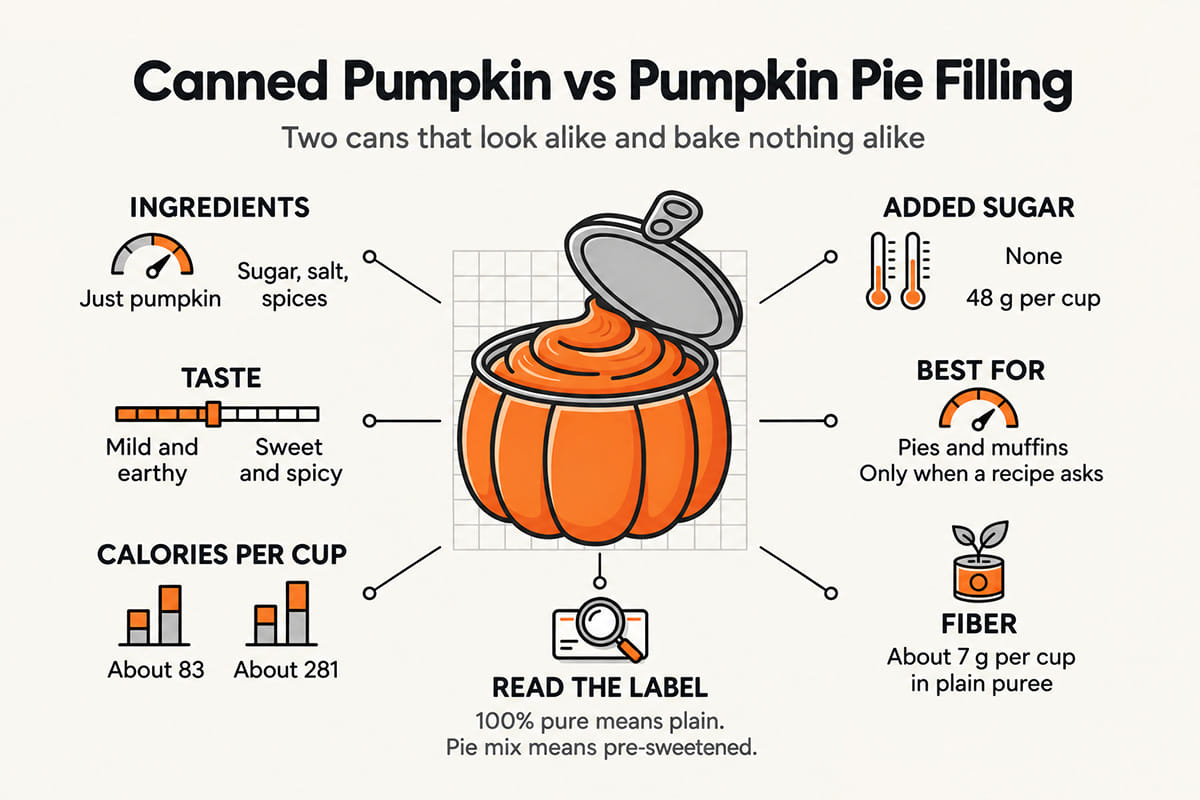
This one is a shortcut in a can. Some labels call it pie mix or a ready made pie base. It holds cooked squash plus sugar, salt, water mixed with a spice blend of cinnamon, ginger and cloves.
It sounds handy and it can be. Every individual brand picks the sweetness and the spice level for you though. You don’t get a vote.
The numbers show how big the gap is. Consumer Reports says pie mix can have about 48 grams of added sugar in a single cup. That’s about 12 teaspoons of sugar. USDA data shows a cup of canned pie mix has around 281 calories, while a cup of plain puree has only about 83 calories. Same base but very different can.
Label Words to Look For
Labels can be sneaky, so learn the code words.
Plain and unsweetened: “100% pure” “solid pack” “no sugar added” or just “puree.”
Sweetened and spiced: “pie mix” “pie filling” “seasoned” “with spices” or “ready to use.”
If you see the second group the can is a pre-sweetened dessert base. If you see the first group then it’s a blank canvas.
Health. Plain puree is loaded with fiber and vitamin A. Consumer Reports notes that a cup of the canned stuff has about 7 grams of fiber and even more carotenoids than the fresh cooked kind. Carotenoids are the orange plant colours (like beta carotene) that your body turns into vitamin A. That is good for your eyes and your immune system. Pie filling keeps some of that goodness but hides it under a pile of sugar.
Control. This is the big one. With plain puree you decide how sweet and how spicy your food gets. With the pre-mixed tin that choice is already made.
Which One Should You Use?
Grab plain canned pumpkin most of the time. It works in nearly every recipe and gives you full control. This is what we prefer to use now after making rookie mistakes when we were new to cooking at home.
In my experience when testing fall recipes in the kitchen, the sweetness can cause most of the trouble. The most common mistake we see is a baker who buys pumpkin pie filling for a loaf or a soup because both cans sit side by side and look alike. The loaf turns out gummy and overly sweet. The soup tastes like dessert for dinner.
Think of real kitchens. A mom in Ohio making Thanksgiving pie wants to set her own sweetness. A student in Manchester making a big pot of autumn soup doesn’t want cinnamon in there. Both need plain puree.
Here is where each can shines:
- Pies, cheesecakes and custards: Puree. You add the eggs, cream and spice yourself.
- Muffins and loaves: Puree. Your batter stays balanced and not too wet.
- Soups, pasta sauces and chili: Puree only. Sweet spiced soup is a sad surprise.
- Smoothies and oatmeal: Puree. Add your own honey or maple syrup.
- Quick shortcut desserts: Pie filling works only if the recipe clearly calls for it.
Want to see plain puree in action? Our pumpkin cheesecake swirl pie is a great place to start. For something easy to slice and share try the pumpkin loaf with cream cheese.
Not All Canned Puree Is the Same
Two cans with the same label can taste different.
America’s Test Kitchen learned that each brand uses its own cultivar which is just a fancy word for a type bred for a special job. Their winning can used the Dickinson type grown in Illinois. The lowest ranked one used the Golden Delicious type grown in Oregon. Another report from AOL says some processors blend winter squashes like butternut or Hubbard. Snopes adds that the FDA allows sweet squash blends to be sold under the pumpkin label.
Is that a problem? Not really. Squash blends often taste great. This explains why your favourite recipe may taste a little different when you switch brands. When we bake with a new brand for the first time we like to make a small test batch first. It saves a lot of butter and a lot of sadness lol.
Can You Swap One for the Other?
Sometimes yes. It just takes a little care.
Using puree in place of pie filling is easy. Add the sugar and spice yourself. As a starting point try about ¾ cup of sugar and 2 teaspoons of pie spice for one 15 ounce can. Then taste and adjust. Pie spice is just a blend of cinnamon, ginger, nutmeg and cloves.
Using pie filling in place of puree is much harder. You cannot pull the sugar back out even if you wanted to. If you have no other choice simply cut the sugar in the recipe by a good amount and go easy on the spice. Taste the batter before it goes into the oven. Baking is a bad time to guess.
One handy fact: a 15 ounce can of pure puree holds about 1¾ cups according to Libby’s. Keep that number in mind when a recipe asks for a set amount and your measuring by the cup.
Can You Roast Your Own Instead?
Sure you can! Cut a small sugar pumpkin in half. Scoop out the seeds. Roast the halves until soft. Then scoop out the flesh and blend it smooth.
The trick is water. Fresh mash is often wetter than the canned kind. When we make our own we let it drain in a sieve for about 30 minutes. This keeps pies from turning soggy and muffins from sinking in the middle. It took us a few messed up batches to really learn what works and what doesn’t and that’s one of the reasons for sharing this write up.
Pick the right type too. Big carving gourds tend to be watery and bland. Small sugar varieties or a butternut squash give you far better flavour. Even so, AOL’s taste test points out that canned pumpkin puree is easier to use and more consistent than a homemade mash. For a busy weeknight the tin wins.
Shopping Tips for the United States and the UK
In the United States both cans sit close together on the baking shelf. Read the front and the back. A can that says “100% pure pumpkin” is what you want for most recipes. A can that says “pumpkin pie filling” or “pie mix” has the sugar and spice.
In the UK tinned puree are harder to find. Check the baking aisle or the American food section of big supermarkets. Stock often shows up around autumn. You can also roast your own using a butternut squash or a small sugar variety. We find that Butternut is easy to find in British shops and gives a smooth and sweet mash.
How to Store Leftover Puree
Once you open the can don’t leave the rest in it. Spoon it into a covered container and keep it in the fridge. Use it up within a few days.
For longer storage, freeze it. One interesting food hack we suggest is freezing puree in small cubes or in mini silicone muffin cups. Then you can thaw just what you need. A spoonful in your morning oatmeal or a dash in your pasta sauce is a great way to use it up.
Quick Tips Summary
- Read the front and the back of the can every time.
- Look for “100% pure pumpkin” on the label.
- Keep a spare tin of plain puree in your pantry for fall.
- Test a new brand in a small batch first.
- Taste your batter before it bakes.
The Bottom Line
The choice between canned pumpkin vs pumpkin pie filling comes down to control. Plain puree is a clean start. You add the sugar and spice and the recipe turns out the way you planned. The pre-sweetened tin saves a few minutes but takes away your ability to control the taste and adds a lot of sugar.
When in doubt just choose plain canned pumpkin. It works in pies, loaves, soups and smoothies. Save the pumpkin pie filling for recipes that ask for it by name. Now go grab the right can and get baking. The winter season goes by fast!