



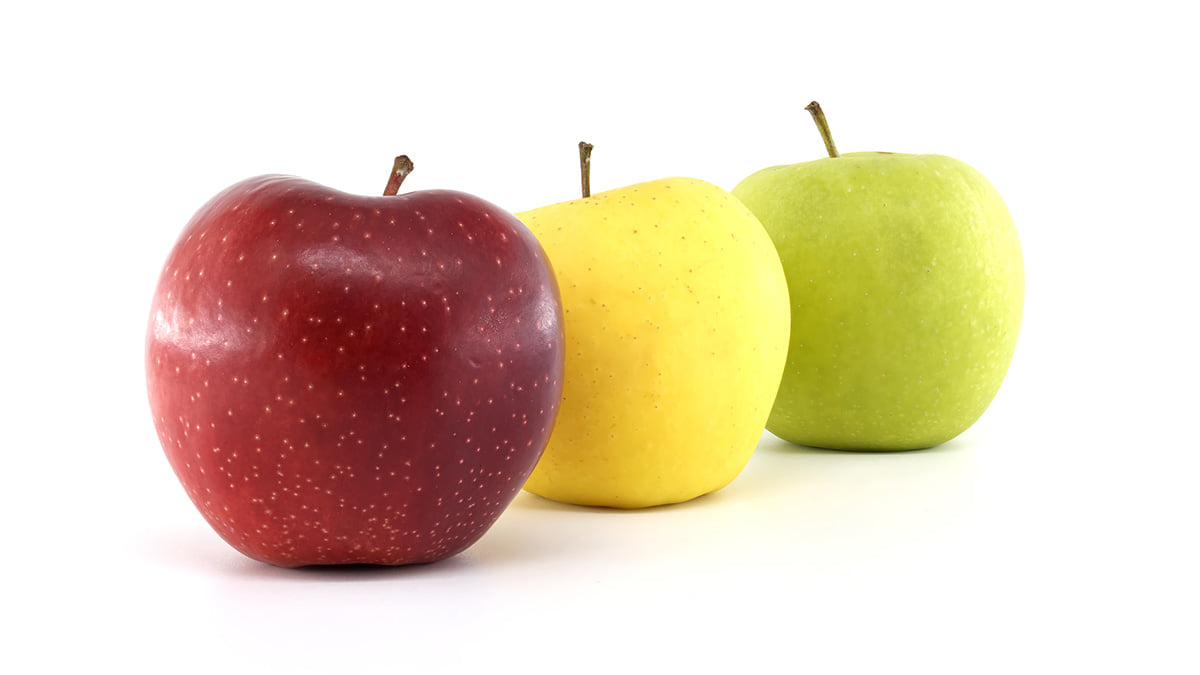
Let’s clear up any confusion about apples for baking and go through the pros and cons of the different varieties. Here’s the short summary. Granny Smith is the top pick for pies and anything that needs to keep its shape. Honeycrisp works best in crisps and crumbles where a juicier bite is welcome. Gala is sweet and mild but it softens fast in the oven so it’s better paired with a firmer variety than used alone.
Later on in this article we’ll share one of our favourite combinations that Gordon Ramsay also likes to use so that you can take your bakes to the next level.
Fun fact before we go any further. Apples are the second most popular fresh fruit in the whole United States sitting just behind bananas according to USDA numbers. With that much fruit going into kitchens every year, picking the right one for baking is worth 5 minutes of your time.
Now let’s jump into why because the reasons actually change how your bake turns out.
Why Does Granny Smith Hold Its Shape So Well in the Oven?
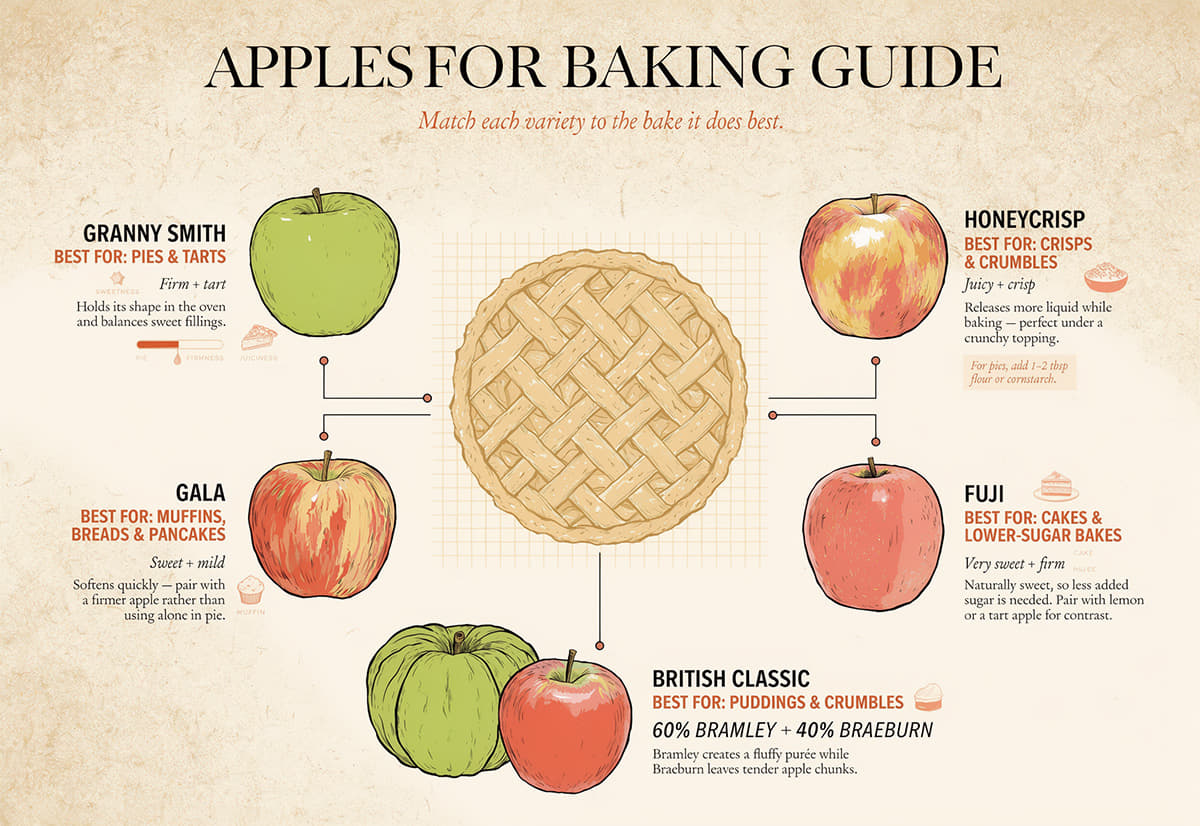
Granny Smith apples are famous for being tart enough to make your cheeks pucker. That sourness isn’t just about flavour though. It’s also the reason this variety barely softens during baking. One food science comparison found Granny Smith carries nearly double the malic acid of Honeycrisp and that extra acidity acts like a natural firming agent. Firmness tests back this up nicely too. Granny Smith usually scores around 6.4 on the pressure scale labs use to measure crunch while softer varieties often land closer to 4.5. That gap is a big reason one holds together in a pie and the other turns to mush.
In my experience testing pies with all 3 apples for baking side by side, Granny Smith slices came out of the oven looking almost identical to how they went in. That’s a rare trait among baking apples and it’s why this variety shows up in nearly every classic pie recipe, whether you’re baking in a kitchen in Ohio or in Manchester. It slices clean, keeps a bit of bite and balances sweet fillings like caramel drizzle or a scoop of vanilla ice cream. Our apple pie recipe with pie filling leans on exactly this trait to keep every slice neat instead of collapsing into sauce.
One honest note though. Even Granny Smith isn’t invincible. Bake it too long or too hot and it will still soften more than you’d like.
What Makes Honeycrisp So Juicy and Crisp?
Honeycrisp was bred on purpose at the University of Minnesota back in the 1990s. Researchers wanted the crunchiest ‘n’ juiciest bite anyone had ever tasted from an orchard fruit and they got it. Honeycrisp cells are noticeably larger than in most other varieties. When you bite into one raw, those oversized cells burst open all at once giving that almost explosive crunch people rave about.
Researchers who study fruit breeding actually ranked Honeycrisp in the top 1% for juiciness out of hundreds of test varieties bred from it. Basically if juicy apples had a score board, this one would be sitting right at the top.
That same trait changes how it acts in a baking dish. Because Honeycrisp holds so much liquid it releases more juice while baking compared to Granny Smith. That’s not a flaw. It’s just a different personality suited to different jobs. This makes Honeycrisp fantastic in a crisp or crumble where extra juice mixing with butter and brown sugar is exactly what you want bubbling under a crunchy topping. Our apple crumble with ice cream is a great place to let this fruit shine.
Here’s a fun stat for your next dinner table chat. University of Minnesota researchers found Honeycrisp can stay crisp in cold storage for up to 7 months. That’s roughly double the shelf life of many softer varieties. So if you spot a slightly older bag at the store don’t worry, it’s probably still got plenty of crunch left in case you grab these apples for baking.
If you’re using Honeycrisp in a pie just know it may release more liquid than you’re used to. A tablespoon or two of extra flour or cornstarch in your filling will soak that up without any trouble.
Gala: Sweet ‘n’ Mild but a Little Too Soft on Its Own
Gala is the friendly easygoing type. It’s sweet, low on tartness and smells amazing while baking. The catch is it doesn’t have much acid or firmness to fall back on so it softens faster than Granny Smith or Honeycrisp once the oven heats up. Lab measurements typically place Gala’s sugar level around 11 to 12.5 on the Brix scale. Which is the standard way food scientists measure natural sweetness. While its acid content sits far below Granny Smith’s.
To put a number on that gap, Gala usually holds around 4 grams of acid per liter while Granny Smith often carries more than double that. That difference alone explains why one tastes like a lemony bite and the other tastes closer to candy.
That’s not a reason to skip it though. Gala works beautifully in muffins, quick breads and pancakes where a soft and sweet bite is exactly the goal. It’s also a smart partner fruit. Toss a couple of Gala slices in with Granny Smith in a pie and you get natural sweetness without dumping in extra sugar. We tested this pairing in our own kitchen and found it cut the added sugar in a standard pie filling by almost a third while keeping the flavour balanced. Bakers have used this mix and match trick for years and it remains one of the easiest ways to improve a pie without touching the recipe itself.
Are Fuji Apples Worth Using For Baking?
Fuji apples often get skipped when people talk about apples for baking but they deserve a spot on this list. Grown first in Japan back in the 1930s, Fuji is one of the sweetest apples you’ll find anywhere. It usually tests between 15 and 18 on the Brix scale which is just a fancy way food folks measure sugar content. That’s noticeably sweeter than Honeycrisp so a Fuji based bake needs a lot less added sugar to taste good.
Texture wise Fuji sits right in the middle of the pack. It’s dense and firm enough to survive a good stretch in the oven but soft enough to blend nicely into cakes and muffins without fighting for attention. If you’re after a fruit crumble or loaf that tastes sweet without needing a full cup of sugar dumped in, Fuji earns its place in the bowl.
One thing worth knowing though, this variety doesn’t carry much natural tang. Pair it with a splash of lemon juice or mix with a tarter variety like Granny Smith if you want a filling with a nice contrast.
What’s The Best Combo For A British Style Bake?
If you’re baking on this side of the pond or you just love a proper crumble the Bramley and Braeburn combo is worth trying. Bramley apples were first discovered in Nottinghamshire back in 1809 and they’ve been the go to cooking apple across the UK ever since. Unlike the other varieties on this list Bramley doesn’t hold its shape at all. It breaks down into a soft fluffy puree and that’s actually the whole point. Bramley also packs roughly two and a half times more vitamin C than your average apple, along with enough natural acid that it barely needs a squeeze of lemon to stay looking fresh once sliced.
On its own though Bramley can taste sharp enough to make your eyes water. That’s where Braeburn comes in. Braeburn apples are sweet and tart with a firm bite that holds its shape well in the oven, which balances out Bramley’s tang and keeps a bit of texture in the finished bake. Put the two together and you get a filling that’s part fluffy puree and part tender apple chunk wrapped in a flavour that tastes yummy.
A handy ratio to remember is to try roughly 60% Bramley to 40% Braeburn if you want plenty of that classic fluffy texture with some chunks or go closer to even if you’d rather keep more bite in every spoonful. It’s a pairing found in kitchens all across Britain and once you’ve tasted it it’s easy to see why. This is one of our favourite combinations to use in our own baking. Even chef Gordon Ramsay is a fan of this pairing!
Why Do These Apples Behave So Differently in the Oven?
Here’s the science bit kept short and painless. Fruit like this is held together by something called pectin which works like edible glue between the cells. Acid strengthens that glue and keeps it from breaking down too fast under heat. That’s why tart varieties like Granny Smith stay firmer while sweeter lower acid ones like Gala soften more easily.
There’s also the moisture factor. Roughly a quarter of an apple’s volume is actually made up of tiny air pockets sitting between the cells. As the fruit heats up, that trapped air and moisture turns to steam and pushes outward. Juicier varieties like Honeycrisp release more of this liquid as they bake. Firmer varieties with less internal moisture like Granny Smith stay drier and hold their structure better. This is one of the reasons they are popular and good for baking.
None of this means one variety beats the others across the board. Each one simply has a job it does well the same way you’d grab a specific tool from a toolbox instead of whatever is closest.
A Handy Comparison at a Glance
Best for pies and tarts: Granny Smith, thanks to its firmness and tang
Best for crisps, crumbles and baked fruit desserts: Honeycrisp for that juicy soft bite
Best for muffins, breads and pancakes: Gala for mild natural sweetness
Best for cakes, muffins and low sugar bakes: Fuji for natural sweetness with a firm reliable bite
Best for classic British puddings and crumbles: A Bramley and Braeburn mix for that fluffy puree with a bit of tender bite left in
Best combo trick: Mix Granny Smith with Gala or Honeycrisp for balanced flavour and texture in the same dish
Best UK style combo trick: Mix Bramley with Braeburn, roughly 60% to 40% for a soft tangy filling that still has a little texture running through it
Keeping slices fresh while you prep is a quick kitchen tip. If you’re slicing fruit ahead of time for any of these recipes here’s a trick worth knowing. Soak your slices in cold water with a pinch of salt. Use about half a teaspoon per cup of water. Let them sit for five to ten minutes then rinse well. This slows down that brown colour from creeping in once the flesh meets air. Salt interferes with the enzyme responsible for browning so a quick soak buys you real prep time.
In our kitchen testing this salt water soak kept slices looking fresh for up to 24 hours and up to several days once refrigerated. Plain water alone usually only buys you an hour or two before browning creeps in.
Lemon water does something similar though it can leave a slight citrus taste behind if you skip the rinse. Either way your slices will look fresh and ready for baking instead of sad and brown by the time your oven finishes preheating.
The Bottom Line
If you only remember one thing from this guide, make it this. Reach for Granny Smith when shape matters most, Honeycrisp when you want juicy and crisp and Gala when you want gentle sweetness or a partner fruit to round things out. Once you understand what each variety brings to the table, choosing the right baking apples stops being a guessing game and starts being second nature. The same way a good baker just knows.
Want to see these varieties in action? Check out our full Complete Guide to Apples for Baking Desserts for more tips on turning fresh fruit into a proper dessert.